Panoramic: Automotive and Mobility 2025
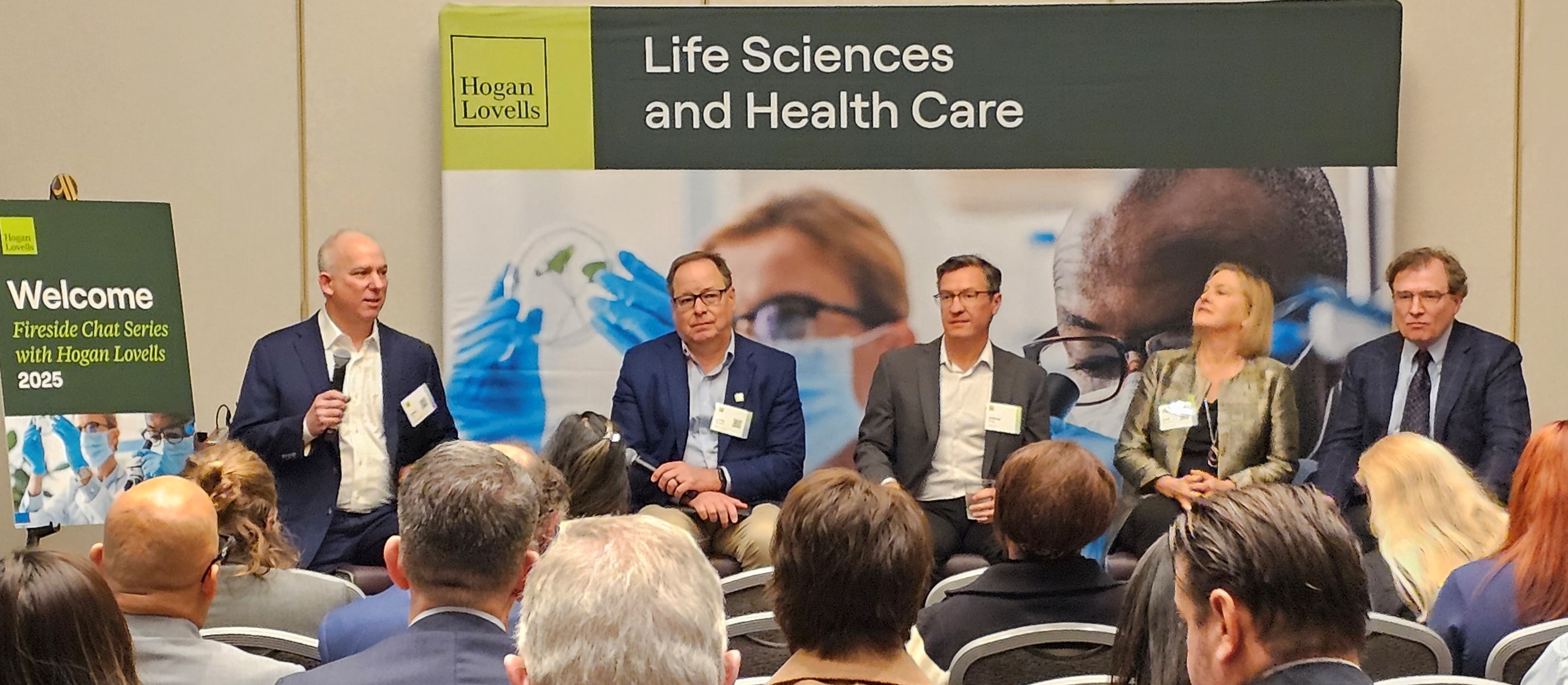
Speaking at the 2026 J.P. Morgan Healthcare Conference, John Osborn, senior advisor in the Hogan Lovells life sciences and financial services practices, moderated a panel discussion with HL corporate & finance partner Andrew Strong and HL intellectual property partner Kristin Connarn, as well as OncoResponse CEO Clifford Stocks and SymBiosis Capital Management Partner Chidozie Ugwumba. The panel observed a late‑2025 rebound in venture capital deployment, especially for later‑stage assets, which they forecast to continue in the coming year. Beyond financing mechanics, they explored qualitative factors that can make or break an early‑stage investment, including leadership style, transparency, and responsible clinical trial plans, with sound governance emerging as a key differentiator for early‑stage companies. Panelists also highlighted IP as a critical foundation for investor confidence, outlining corresponding “red flags.” Their conversation is summarized below.

Setting the stage for the J.P. Morgan panel conversation regarding early-stage medical product development, John Osborn, senior advisor in the Hogan Lovells life sciences and financial services practices, solicited advice on the general investing landscape moving into 2026. Reviewing challenges associated with fundraising in the past year, Clifford Stocks, CEO of OncoResponse, observed an upswing in venture capital that took place in the second half of 2025, primarily for later-stage assets. He expressed optimism over specific therapeutic areas – including metabolic and neurology – as well as medical products that incorporate artificial intelligence.
Mr. Stocks predicted that the pharmaceutical industry would continue “raising the bar” for amounts paid for a quality asset. While describing persisting challenges for Series A investors, Mr. Stocks also recalled his surprise over several recent large ($500 million or more) fundraising rounds. He forecast difficulty conducting earlier stage deals in 2026, while observing that product candidates that reach Phase 3 are increasingly valuable. Accordingly, he advised the J.P. Morgan audience to factor the potential for significant capital into their business plan. On the other hand, while pondering the aphorism to “never turn down money when it's available,” Osborn outlined potential concerns regarding dilution and credibility.
Diving into performance metrics that venture capital firms seek for medical product investments in 2026, the panel discussed how venture capital (VC) firms evaluate potential investments. One example, for earlier stage biotechs, even though a company's team might be thinner, and a financing strategy less fleshed out, VC firms may also consider in their investing decisions “how they might be helpful outside of money,” assessing whether someone on an investor's team might be willing to serve on the board for the target company to provide crucial guidance and mentoring.
Other topics discussed were the homing in on the importance of quality culture, The management style of a leadership team may weigh heavily on investing decisions. For example, if a CEO is overly confident in their pronouncements regarding their company's products, that could detract from an investor's interest.
The panel emphasized the importance of “honest” use of investment dollars. Andrew Strong, partner in the Hogan Lovells corporate & finance practice, agreed: “Management that prepares well, communicates well, and is transparent” is vital to a successful financing for early-stage drug development companies. Mr. Strong shared his experience in starting up 15 to 20 early-stage companies each year, and he described how he advises them on the “founder's dilemma” which is knowing the right time to start a company and how to position it for success in a crowded marketplace. He announced a new Hogan Lovells program called “HL Launchpad,” which will provide a suite of services and defer legal fees to help companies advance at early stages.
Asked about how much money should be sought by an early-stage company seeking assistance from venture capital, the panel agreed that the relevant metric is the amount of money that will be necessary to get a product candidate to the next meaningful inflection or stage of success. They highlighted the need to properly evaluate human capital as part of that investing equation.
Shifting the conversation to intellectual property concerns, Kristin Connarn, partner in the Hogan Lovells IP practice, pointed out that patents should often be filed before investing conversations take place. Even if a legal team has merely one page of an inventor's notes, they might be able to inexpensively file for IP protection on a preliminary basis. Then, Ms. Connarn explained, the next question for an early-stage investor is strategically assessing how in-depth a post-provisional filing should be to best protect know-how and trade secrets, while keeping filing costs as low as possible.
Answering a question on the extent of information to disclose in early filings, Ms. Connarn discussed how she offers clients strategies regarding “enablement.” Although an IP claim should be broader than what was specifically tested, it should also be narrow enough to permit a claim to be granted. Ms. Connarn warned that if patent prosecution occurs later down the road, claims that are too broad could result in forfeiture of that IP because the ideas are disclosed but the claims were not enabled.
Ms. Connarn also outlined some “red flags” that she has noticed on the IP front, such as when it's unclear whether an invention was made by someone who was working for a private company or university, which could signal that they do not “own” that invention. Investors may also be concerned if there are many provisional patent applications, and yet there has yet to be a search report or examination into the strength of those applications that would only occur upon non-provisional conversion. Discussing whether certain IP claims may be pertinent to investors' priorities, Ms. Connarn urged: “The IP story must match the business and business development plans.”
Following a question from the audience, the panel advised that transparency is vital for gaining VC backing. It should not be left to an investor to discover a significant issue or problem which would up-end the entire investor relationship. Candor and forthrightness are key in discussions with investors.
The annual J.P. Morgan Healthcare Conference provides a unique opportunity to make connections among life sciences and health care emerging companies, pharmaceutical & biotechnology firms, digital health companies, medtech sponsors, investors, and advisors. The article above is part of our JPM 2026 “Fireside Chat” series of presentations, through which our team of attorneys spoke with stakeholders at the conference about the most critical global health care issues emerging today.