Panoramic: Automotive and Mobility 2025
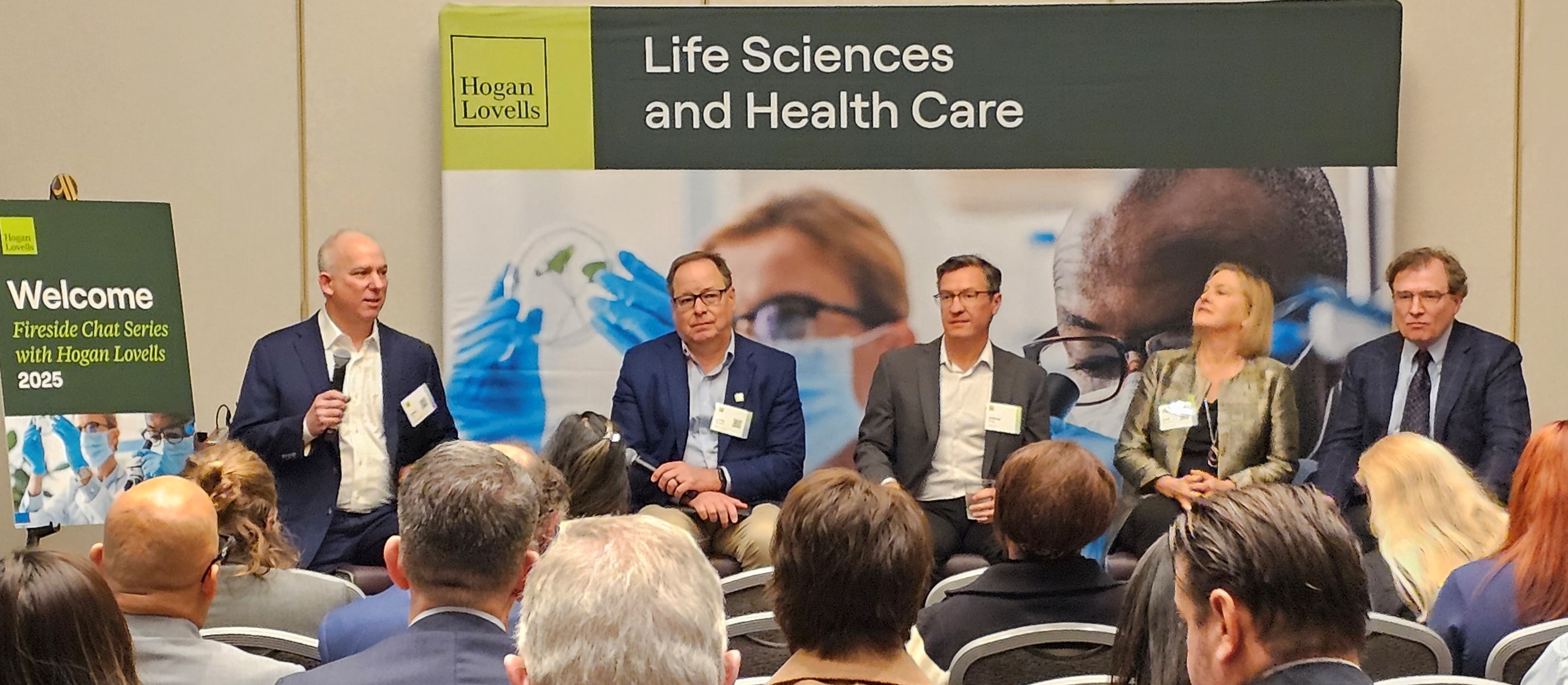
With novel regulatory frameworks, market dynamics, and supply chain pressures influencing life sciences & health care deal structures and partnership models, biopharmaceutical companies are increasingly pursuing a broader variety of license and collaboration structures, and are seeking to maintain greater flexibility as they determine how to develop and commercialize therapeutic products. Our “Revenue Generation and Risk Sharing in Global Licensing & Collaboration Transactions” Fireside Chat at the J.P. Morgan Healthcare Conference on January 13 will offer valuable insights into the market trends our panelists are seeing as life sciences transactions are negotiated in the current deal landscape. From selecting the optimal transaction structure to managing diligence risks, we'll illuminate best practices for structuring partnerships that help companies stay ahead of the curve.
At our licensing and collaboration transactions Fireside Chat, we will explore how companies negotiate diligence obligations in their partnering agreements, including obligations to use “commercially reasonable efforts” (CRE) to achieve specified objectives. For example, licensees must generally agree to exercise diligence – usually in the form of heavily negotiated CRE obligations – in the development and commercialization of licensed products. Below we provide a brief overview of trends and key issues in crafting CRE terms for life sciences partnering agreements.
One major question in defining CRE is whether to use an objective or a subjective standard. The former measures performance against what a reasonable company in the same industry, with similar size and resources, would do under comparable circumstances. The objective standard is benchmarked to industry norms rather than to the specific party's internal priorities. In contrast, a subjective CRE standard is tied to the level of efforts the specific party would typically use to accomplish the relevant objective given that party's own actual size, resources, and business priorities. Choosing between these standards impacts how diligence will be evaluated if disputes arise and shapes parties' expectations about performance.
Just as important as the CRE standard is the manner in which the diligence obligation is woven into the partnering agreement. CRE does not necessarily impose a requirement to commercialize in all parts of the world; however, there may be an agreed upon obligation to use CRE to commercialize within certain countries or territories (e.g., “in all major markets”). Similarly, CRE does not necessarily require a product to be launched in all indications, but the parties may tie the diligence obligations to certain specified indications. And the timing of the diligence obligation can be critical, as the licensee will want to avoid being bound to CRE at a time when it has not received the necessary training, support, and technology transfer to successfully develop and commercialize the licensed product.
Where a broad definition of CRE is adopted, it tends to be difficult for a licensor to prove a breach. That being the case, recent case law casts some doubt as to the outcome of CRE-related disputes, as courts have shown a willingness to undertake a detailed review of the facts and consider numerous factors behind companies' decisions, resulting in exhaustive discovery, analysis and debate over prioritization decisions. The potential for litigation on CRE terms means that if a company deprioritizes a product, it should be prepared to defend that decision in court, and should thoroughly document its decision-making process.
There is no “one size fits all” solution for crafting CRE terms in a contract, so parties should not rely on boilerplate contract provisions. Companies must consider whether there should be a subjective or objective standard, the factors that may be considered in assessing CRE, as well as the scope and timing of the CRE obligations, often taking into account factors specific to the licensed product at issue.
Authored by Cullen Taylor and Hank Watsky
For more information on licensing & collaboration transactional concerns for companies in the life sciences sector, you can register for our Fireside Chat at the 2026 J.P. Morgan Healthcare Conference online here. The conference provides a unique opportunity to make connections among life sciences and health care emerging companies, pharmaceutical & biotechnology firms, digital health companies, investors, and advisors. Our “JPM 2026 Hot Topics” series aims to help keep you informed ahead of the conference on the most important global regulatory, transactional, and IP legal issues emerging today.